The Real Estate (Regulation and Development) Bill 2013 proposes (1) uniform guidelines for registration of real estate projects – to improve transparency, (2) to increase developers’ obligations towards buyers and (3) to form additional real estate regulators, tribunals and councils to overlook the speedy resolution of litigation.
As most of the rules pertain to developers, they will help consumers to make better buying decisions; more importantly they will bring clarity through a single website for various projects (which though available, were not displayed by a Government body). Besides, delivery timelines will be more clearly defined.
We believe most of the clauses of the bill are carried out by various state governments. Most organized developers (listed and larger unlisted) fare well in terms of transparency and disclosure of information on projects, adhering to local norms. Developers, such as DLF, Sobha and Puravankara, provide most of the project-specific details.
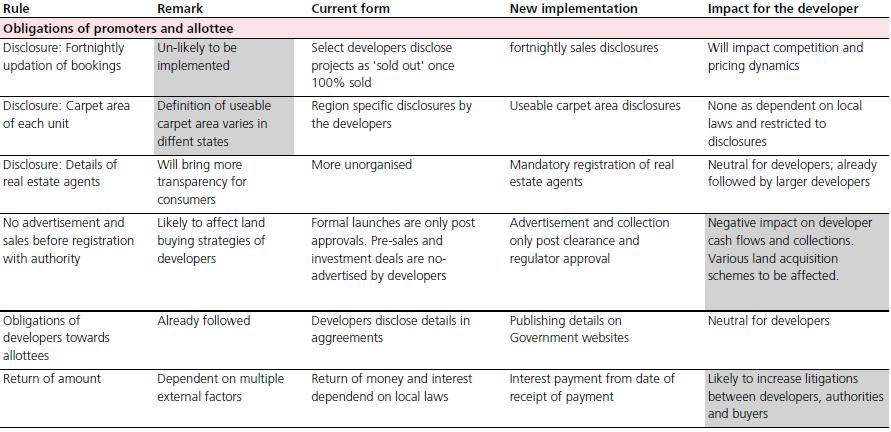
Excluding disclosures, certain rules in the bill can cause cash-flow issues for developers and are likely to either (1) increase borrowings or (2) lead to lower supply in the market and hence increase prices.
The Following chart shows Impact of New Rules like stringent advertising, cash collection norms etc
What is Unaddressed ?
The development of projects is dependent on timely Government approvals—an issue that the bill does not address. Land being a state subject, conflicts exist between the bill’s requirements and local regulations. We believe adhering to the 70% fund-deployment clause will require support for developers from banks.
Although the draft bill has been cleared by the Union Cabinet, we believe it will take at least two years before the bill becomes an act.. The bill has to be cleared by the parliament; it is likely to be referred to a standing committee during the process. Once the Central Government clears the bill (this is the election year), state governments will have to implement the bill, incorporating changes in accordance with relevant local laws.